 blog
blog
Composite vs Wood Deck Cost 2026: Which Saves More?
Table of Contents
- Composite vs Wood Deck Cost: The 2026 Breakdown
- Average Cost of Custom Deck Installation 2026
- What Drives the Price: Size, Grade, and Site Conditions
- Composite Decking Maintenance Requirements
- Wood Deck Staining and Sealing Costs
- Hidden Costs of Deck Replacement
- Regional Climate and Resale Value: Why Location Changes the Math
- Financing and Payment Options for Your Deck
- Frequently Asked Questions
Last Updated: September 22, 2026
Composite vs Wood Deck Cost: The 2026 Breakdown
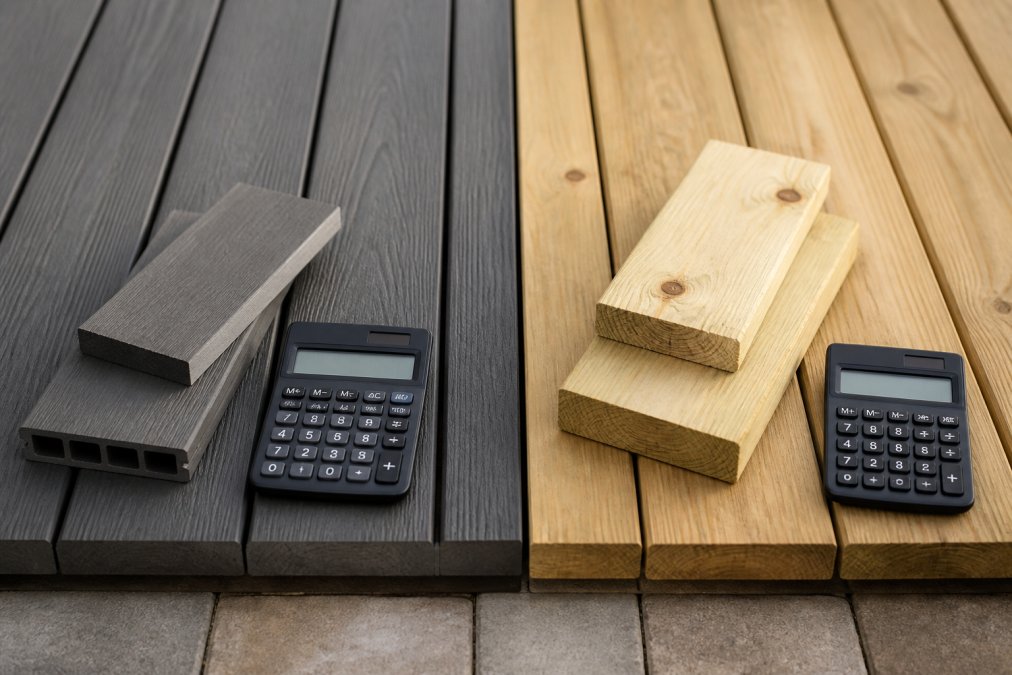
The composite vs wood deck cost 2026 comparison comes down to one honest truth: wood wins on the invoice, composite wins on the ledger. We walk homeowners through this math every week, and the pattern rarely changes. Wood decking typically carries a lower upfront price per square foot, while composite asks for more at purchase and far less afterward. Below, we break down both sides of that trade-off so you can pick the deck cost structure that fits your budget and your patience.
Upfront Material and Labor Costs
Wood decking costs less to buy and install, while composite decking costs more per board and often more in labor. That gap is the headline every homeowner notices first.
Material grade drives most of the difference. Pressure-treated lumber sits at the budget end of the market. Capped composite boards sit at the top. Labor rates follow the same curve, because composite decking fasteners, hidden clip systems, and tighter board spacing take longer to install correctly.
What most guides miss is that the spread between the two narrows once framing, sub-base prep, and joist spacing enter the quote. Those structural costs apply to both materials.
Total Cost of Ownership Over 20 Years
Over a 20-year horizon, composite decking usually costs less in total, because wood demands repeated staining, sealing, and occasional board replacement. The upfront investment is only half the story.
A common mistake is comparing sticker prices and stopping there. Annual upkeep, moisture absorption, warping and splintering, and fading and discoloration all add to what wood really costs. Composite's maintenance-free reputation holds up best when the substructure is built correctly from day one.
| Factor | Wood Decking | Composite Decking |
|---|---|---|
| Upfront cost | Lower | Higher |
| Annual upkeep | Staining, sealing | Soap and water wash |
| Lifespan | Shorter, with repairs | Longer, with warranty |
| Rot and insect risk | Higher | Minimal |
| Resale appeal | Good | Strong |
Average Cost of Custom Deck Installation 2026
There is no single average cost of custom deck installation 2026 figure that fits every yard, because size, material grade, and site conditions move the number more than any national benchmark does. That said, homeowners still need a starting range to budget against, so here is how the numbers typically stack up when you break the project into its parts.
Installed Cost Per Square Foot by Material
Most contractors quote decking in installed cost per square foot, which bundles the boards, fasteners, labor, and basic trim. Pricing depends on material grade and regional factors.
Those ranges assume a simple rectangular deck on relatively level ground with standard railing. Anything beyond that pushes the number up.
What the Per-Square-Foot Price Actually Includes
A useful quote itemizes the deck into layers, because the decking surface is only one of them:
- Framing and substructure: pressure-treated joists, beams, and ledger board, often 15 to 25 percent of the total
- Footings and sub-base prep: concrete piers or helical piles, plus excavation and grading
- Decking surface: the boards themselves, which is where wood and composite diverge most
- Railing and stairs: frequently quoted separately and easy to overlook; railing alone can run several thousand dollars on a large deck
- Fasteners and hidden clips: composite systems use proprietary clips that add material cost but reduce visible fasteners
- Labor: typically 40 to 50 percent of the installed price, and higher for complex geometry
How Size, Grade, and Site Conditions Move the Number
Size drives the largest share. Square footage multiplies every other cost, from boards to fasteners to labor hours. Material grade sets the per-unit price. Site conditions, including slope, drainage, and access for equipment, add labor complexity that no online calculator captures. A deck built on a difficult slope with custom railings can cost meaningfully more than a simple platform of the same size, which is why two neighbors with similar yards can receive very different quotes.
Hidden Costs That Rarely Appear in the First Estimate
The visible material price is only part of the budget. Homeowners should expect these line items to surface during the project:
- Permits and inspections: required in many jurisdictions before work begins, and fees vary widely by municipality
- Structural framing upgrades: older homes or replacement projects may need a new ledger board, additional footings, or upgraded joist spacing to meet current code
- Demolition and disposal: if an old deck must come down first, tear-out and hauling add cost before any new material arrives
- Drainage correction: regrading or adding drainage to protect the new structure
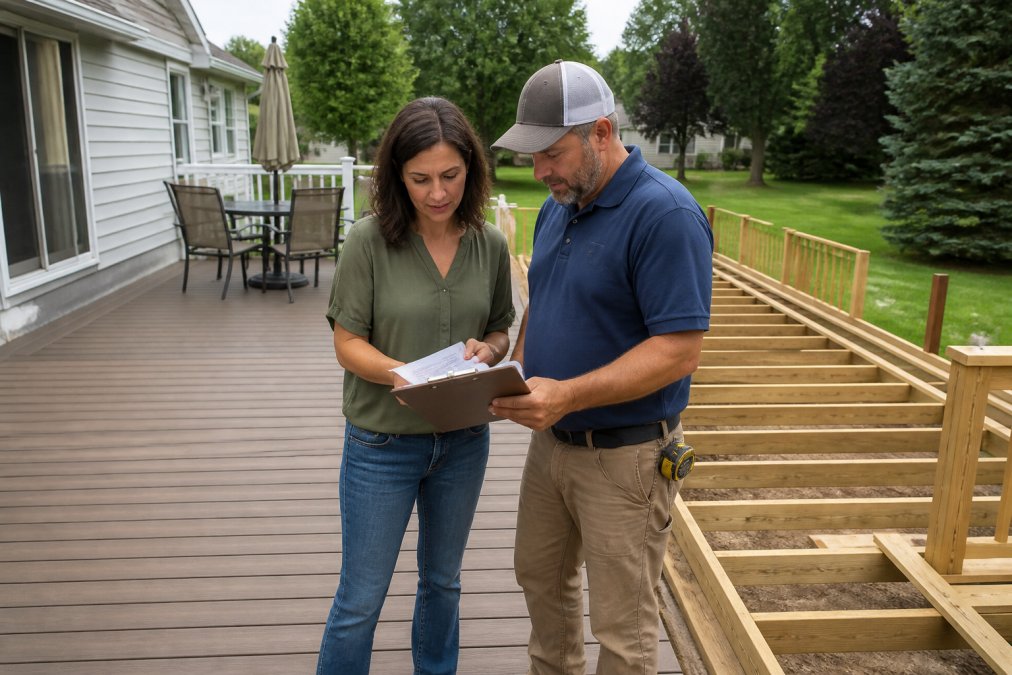
Replacing a deck is not the same project as building one on open ground. The old structure has to come down first, and what it hides underneath often sets the real budget. Homeowners should ask any contractor to itemize these costs in writing before signing.
What Drives the Price: Size, Grade, and Site Conditions
Three variables explain most of the variation in any deck quote: square footage, material grade, and site conditions. Understand these and you can predict your own range before a contractor ever visits.
- Square footage: every additional foot of decking multiplies boards, fasteners, and labor
- Material grade: pressure-treated lumber, mid-range composites, and capped composite sit at different price points
- Site conditions: slope, soil, drainage, and equipment access all change the labor line
- Design complexity: angles, curves, and multiple levels raise installation complexity
- Railing and stairs: often quoted separately and easy to overlook
A deck built on a difficult slope with custom railings can cost meaningfully more than a simple platform of the same size. That is why two neighbors with similar yards can receive very different quotes.
Composite Decking Maintenance Requirements
Composite decking maintenance requirements are minimal: routine cleaning with soap and water, occasional rinsing, and no annual staining or sealing. That low upkeep is the core reason homeowners choose composite despite the higher purchase price.
UV resistance and mold and mildew resistance vary by product, so check warranty coverage before you buy. Boards that stay shaded and damp need more attention than sun-exposed ones. Hidden clip systems keep the surface clean and free of visible fasteners, which also reduces places for debris to collect.
A common mistake is assuming composite is indestructible.
Wood Deck Staining and Sealing Costs
Wood deck staining and sealing costs recur every few years, and that repetition is what erodes wood's upfront advantage. Most wood decks need a fresh coat of stain or sealer on a regular cycle to hold off moisture absorption, rot, and fading.
Hidden Costs of Deck Replacement
The hidden costs of deck replacement catch homeowners off guard more often than the visible ones. Demolition, disposal, and structural repair rarely appear in a first estimate, yet they can add substantially to the final bill.
- Tear-out and hauling: removing the old deck and disposing of debris
- Framing repair: replacing rotted joists or a failing ledger board
- Footing and sub-base work: correcting settling or drainage problems
- Permits and inspections: required in many jurisdictions before work begins
- Code upgrades: railings, stairs, and fasteners may need to meet current standards
Regional Climate and Resale Value: Why Location Changes the Math
Climate and local market conditions shift the composite vs wood deck cost 2026 equation in ways national averages ignore. A material that performs beautifully in a dry climate may struggle in a wet, freeze-thaw region, and vice versa.
Financing and Payment Options for Your Deck
Financing and payment options let homeowners spread a larger upfront investment across time, which changes how the composite vs wood decision feels in practice. A higher purchase price is easier to absorb in monthly payments than in a single lump sum.
Frequently Asked Questions
How much more expensive is a composite deck vs. wood?
Composite decking typically costs more upfront than pressure-treated wood. The real difference shows up over time: wood requires annual staining and sealing, plus repairs for warping and splintering, while composite needs only occasional cleaning. When you factor in long-term maintenance, the total cost of ownership can vary. Get a quote from J Schick & Sons Decks for your specific project.
Does a composite deck increase home value more than wood?
Composite decks tend to appeal to more buyers because they are marketed as maintenance-free and resist fading, mold, and mildew. In resale markets where buyers prioritize low upkeep, a composite deck can strengthen curb appeal and justify a higher asking price. Wood decks still add value, but buyers often factor in future staining and sealing costs. The resale impact depends on your regional market and how well the deck is maintained.
What are the long-term maintenance costs for wood vs. composite?
Wood decks need staining and sealing every 2 to 3 years, plus periodic board replacement for rot and warping. Composite decks require periodic cleaning with soap and water, and occasional tightening of decking fasteners or hidden clip systems. Over a 20-year service life, composite's lower annual upkeep often offsets its higher upfront investment. Your total cost of ownership depends on square footage, climate, and how much DIY work you take on.
How much should a 400 sq ft composite deck cost?
A 400-square-foot composite deck costs more than the same size in pressure-treated lumber because of material grade and installation complexity. Pricing depends on board selection, substructure requirements, joist spacing, railing, and site access. Regional labor rates and material availability also affect the final number. J Schick & Sons Decks can provide a detailed quote based on your yard layout, deck design, and material choices.