 blog
blog
Deck Maintenance Checklist for Spring 2026
Table of Contents
- Why Spring Is the Most Important Time for Deck Maintenance
- Deck Safety Inspection Checklist: What to Look For First
- Signs of Deck Structural Failure You Should Never Ignore
- Best Deck Cleaners for Spring: Choosing the Right Product
- How to Clean and Prep Your Deck for Spring
- Staining, Sealing, and Weatherproofing Your Deck
- Climate-Specific Spring Prep for New Jersey Decks
- Eco-Friendly Deck Maintenance Products and Practices
- Frequently Asked Questions
Last Updated: September 16, 2026
Why Spring Is the Most Important Time for Deck Maintenance
A deck maintenance checklist for spring 2026 should begin the moment the ground thaws. Freeze-thaw cycles push moisture into wood grain, loosening fasteners and opening cracks that widen with each temperature swing. Catching those problems in spring costs far less than repairing structural damage in summer.
Deck Safety Inspection Checklist: What to Look For First
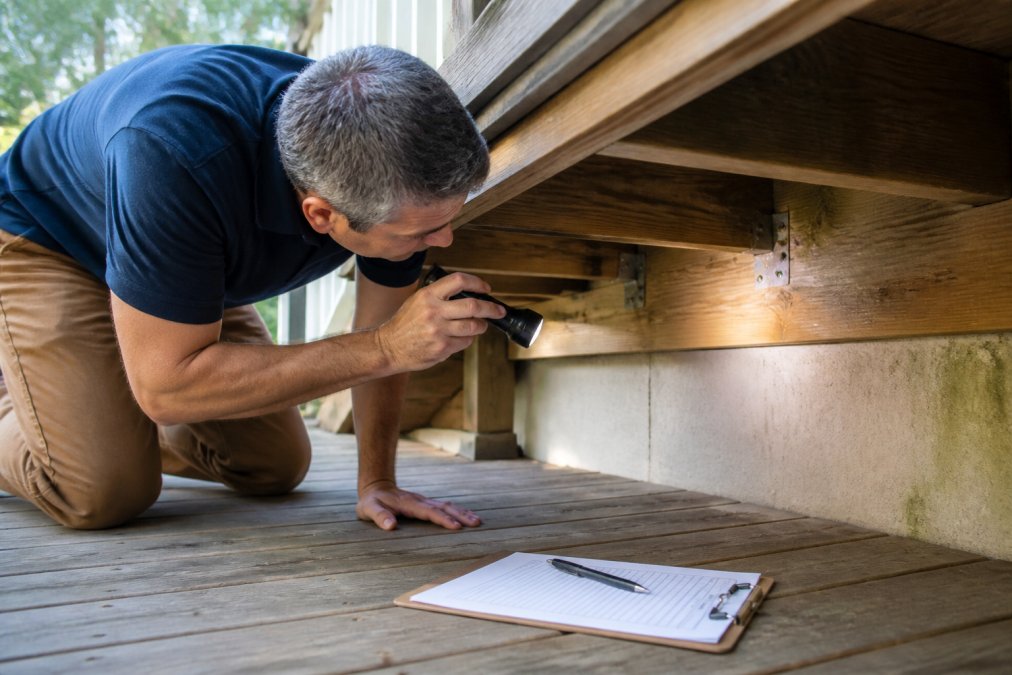
A deck safety inspection checklist should start with the structure, not the surface. Walk underneath the deck if you can access it, and check the ledger board, joists, and footings before you look at anything cosmetic. According to the North American Deck and Railing Association's deck safety guidance, structural connections and attachment points are the most common source of deck failures, which is why they belong at the top of any spring checklist.
Checking the Ledger Board, Joists, and Footings
The ledger board attaches the deck to the house and carries more load than any other component. Look for gaps between the board and the siding, rust streaks, or soft wood you can push a screwdriver into. Check joists for sagging, twisting, or dark staining that suggests trapped moisture. Footings should sit above grade with no soil piled against them, and cracked or settled concrete needs a professional look before the deck carries summer furniture and guests.
Railings, Balusters, and Stair Safety
Grab the handrail and push it firmly in several directions. A railing that moves more than a fraction of an inch has a loose post or failing fastener. Check that balusters are spaced closely enough to block a small child or pet, and inspect stair stringers for cracks where they meet the deck frame.
Signs of Deck Structural Failure You Should Never Ignore
Signs of deck structural failure rarely appear without warning. Soft spots underfoot, a springy feel near the stairs, and visible railing movement all point to problems that will worsen. A deck that bounces usually means a joist has weakened or a fastener has pulled loose. Stop using the deck until a professional inspects it.
Wood Rot, Mold, and Mildew
Wood rot starts where water collects: around fasteners, at board ends, and against the house. Probe suspect areas with an awl or screwdriver; if the tool sinks in easily, the wood has lost structural strength. Mold and mildew appear as dark or greenish patches and signal poor drainage or shade.
Protruding Nails, Corrosion, and Loose Fasteners
Run a hand along the deck boards and feel for raised nail heads, which can cut bare feet and signal that boards have shrunk or shifted. Rusted screws and joist hangers lose holding power, and galvanized fasteners can still corrode when they contact treated lumber. Replace any heavily rusted fastener with hardware rated for the material it contacts.
Best Deck Cleaners for Spring: Choosing the Right Product
The best deck cleaners for spring depend on what is growing on the surface and what the deck is made of. Match the chemistry to the material first, then to the soil type, and always test on a hidden board before treating the whole surface.
Cleaner Chemistry: What Each Type Actually Does
- Oxygen-based cleaners (sodium percarbonate): Break down into oxygen and water, lift organic staining, and are safe on treated lumber, cedar, and composite. They need 10-20 minutes of dwell time to work and are the best default for a deck with pollen, light dirt, or gray surface fiber.
- Chlorine bleach (sodium hypochlorite): Fastest on mildew and algae, but it lightens wood, corrodes fasteners, and can damage nearby plants. Dilute to roughly a 1:3 bleach-to-water ratio, keep it off metal, and rinse thoroughly.
- Oxalic acid cleaners: Restore the natural color of cedar and redwood by removing tannin stains and rust streaks. They are not a mildew killer, so pair them with an oxygen cleaner if both problems exist.
- Sodium hydroxide strippers: Used only when removing an old failing stain or solid-color coating. They are caustic, require gloves and eye protection, and should never touch composite boards.
Material-Specific Cleaning Protocols
| Deck Material | Best Cleaner | Brush | Pressure Washing | Refinish Cadence |
|---|---|---|---|---|
| Pressure-treated lumber | Oxygen bleach | Medium-stiff nylon | Low pressure only (under 1,200 PSI) | Stain every 2-3 years |
| Cedar or redwood | Oxygen bleach, oxalic acid for tannins | Soft to medium | Low pressure only | Oil or stain annually |
| Composite (Trex, TimberTech, and similar) | Mild soap or composite-safe oxygen cleaner | Soft stiff-bristle | Not recommended | No staining required |
| Hardwood (ipe, mahogany) | Wood-safe oxygen cleaner | Soft | Low pressure only | Oil annually |
Composite boards are the easiest to damage. Manufacturers including Trex and TimberTech specify mild soap and water, and warn that pressure washing can force water into board edges, cause surface fuzzing, and void the warranty. A soft-bristle brush, soapy water, and a garden hose handle almost every spring cleanup.
Dilution, Dwell Time, and Rinsing
Follow the label dilution, but a few rules apply across brands. Pre-wet the deck and surrounding plants so the wood does not absorb the chemical unevenly. Apply with a pump sprayer or plastic watering can, let it dwell for the label time (usually 10-20 minutes for oxygen cleaners), then scrub along the grain.
What to Avoid
Skip ammonia-based glass cleaners, which can discolor treated wood, and never mix bleach with an acid-based cleaner, which releases toxic gas. Do not use a wire brush on wood, it gouges the grain and creates splinters. Never apply cleaner to a deck stained within the last 48 hours, since the chemicals will strip the new finish.
How to Clean and Prep Your Deck for Spring
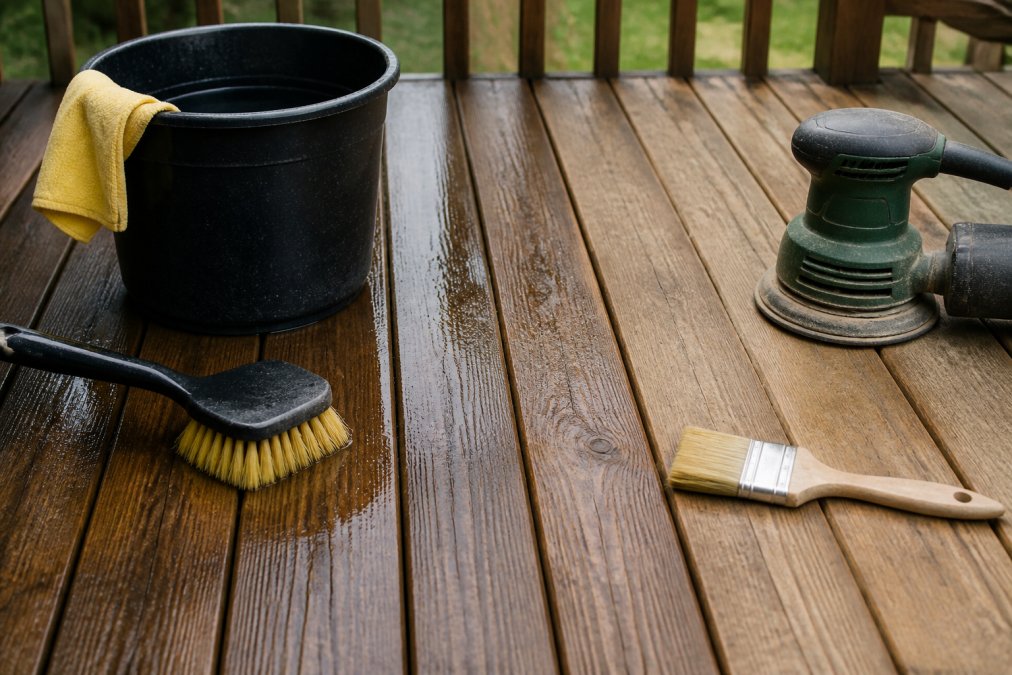
Clean and prep the deck before any staining or sealing, because finish will not bond to a dirty or damp surface. Remove furniture, sweep debris from between boards, and clear leaf litter against the ledger board. A clean, dry surface is the biggest factor in how long a new finish lasts.
Power Washing, Sanding, and Caulking
Power washing removes ground-in dirt quickly, but keep the nozzle moving at a shallow angle so you do not gouge the wood grain. After the deck dries, sand rough patches and raised grain with medium-grit sandpaper, then wipe away the dust. Inspect caulking where the deck meets the house and around posts; old, cracked caulking lets water into the frame, so scrape it out and apply fresh exterior-grade sealant.
Staining, Sealing, and Weatherproofing Your Deck
Staining and sealing protect wood from moisture, UV damage, and surface cracking. Check board moisture before applying anything: finish on damp wood traps water underneath and peels within a season. Sprinkle a few drops of water on the surface, if they soak in quickly, the wood is ready; if they bead up, wait another day.
Climate-Specific Spring Prep for New Jersey Decks
Most spring deck checklists assume one climate. A deck in a humid coastal town faces different spring threats than one in a freeze-thaw inland zone, and the checklist should change accordingly. The table below maps each spring risk to the prep step that addresses it.
| Regional Spring Pattern | Primary Deck Risk | Priority Spring Action |
|---|---|---|
| Inland freeze-thaw cycles | Cracked boards, loosened fasteners, heaving footings | Probe every board end and fastener; re-tighten or replace hardware before sealing |
| Coastal humidity and salt air | Fastener corrosion, mildew, salt film on railings | Rinse metal hardware, apply corrosion-resistant fasteners, treat mildew early |
| Heavy spring rain zones | Standing water, soil erosion at footings, board cupping | Clear board gaps, redirect downspouts, regrade soil away from footings |
| Hot, dry spring transitions | Premature finish failure, wood checking | Seal before temperatures climb; avoid staining in direct sun |
Freeze-Thaw Zones: Inspect Before You Clean
In freeze-thaw zones, water seeps into small cracks in winter, expands when it freezes, and widens the gap each thaw. By spring, hairline cracks can be structural. Probe every board end, fastener head, and the ledger board with a screwdriver before cleaning. A screwdriver that sinks easily means the board has lost holding strength and should be replaced, not stained over.
Coastal Humidity and Salt Air
Salt air accelerates corrosion on screws, joist hangers, and metal railings, and leaves a film that traps moisture against the deck. Rinse metal components with fresh water in early spring, inspect for rust streaks, and replace heavily corroded fasteners with stainless steel or hot-dip galvanized hardware rated for treated lumber.
Heavy Rain and Drainage
Spring rain exposes drainage problems hidden in dry months. Clear debris from board gaps so water can drain, confirm gutters and downspouts direct water away from the deck rather than under it, and verify soil around footings slopes away from the posts. Soil piled against a footing holds moisture against the concrete and post base, where rot and frost heave begin.
Hot, Dry Spring Transitions
In regions that shift quickly from cool to hot, wood can check, small surface cracks that open as the board dries faster than it can adjust. Sealing before temperatures climb locks in the wood's remaining moisture and slows the drying rate. Stain in the shade or on a cloudy day; direct sun dries the finish too fast and causes lap marks.
Eco-Friendly Deck Maintenance Products and Practices
Eco-friendly deck maintenance starts with cleaners that break down safely and avoiding products that harm plants and soil. Oxygen-based cleaners substitute well for chlorine bleach on treated lumber and composite alike. When you rinse, direct runoff toward gravel or lawn rather than a storm drain, and cover nearby shrubs if you use a stripping product.
Frequently Asked Questions
What are the most important items to check during spring deck maintenance?
Start with structural integrity: inspect the ledger board, joists, and footings for rot or movement. Then check railings and balusters for wobble, look for protruding nails or corroded fasteners, and scan for wood rot, mold, or mildew. Clean the deck surface, then stain or seal as needed. This deck maintenance checklist for spring 2026 covers each step in order so nothing gets missed.
How can I tell if my deck is structurally sound for the upcoming season?
Look for signs of deck structural failure: sagging boards, soft spots, cracks in the ledger board, loose railings, or footings that have shifted. Probe suspect wood with a screwdriver; if it crumbles easily, rot is present. Check that all fasteners are tight and not corroded. If you find multiple issues or aren't sure, a professional inspection is worth the cost before the deck season begins.
What is the best way to clean a deck after winter?
Remove debris first, then apply a deck cleaner suited to your material. For pressure-treated lumber, a sodium percarbonate or oxalic acid cleaner works well; composite decks need a softer, non-abrasive cleaner. Scrub with a stiff brush, rinse, and let dry completely. Avoid power washing at high pressure, which can damage wood grain and force water into fasteners. Follow with sanding and sealing if the surface is rough.
How often should I seal or stain my deck to prevent damage?
Most wood decks need sealing or staining every 2 to 3 years, though high-traffic areas or decks exposed to full sun may need it annually. Test by sprinkling water on the surface: if it soaks in instead of beading, it's time to reseal. Composite decks generally don't require staining but should be cleaned regularly. A consistent maintenance schedule extends the life of your deck and protects against moisture and UV damage.