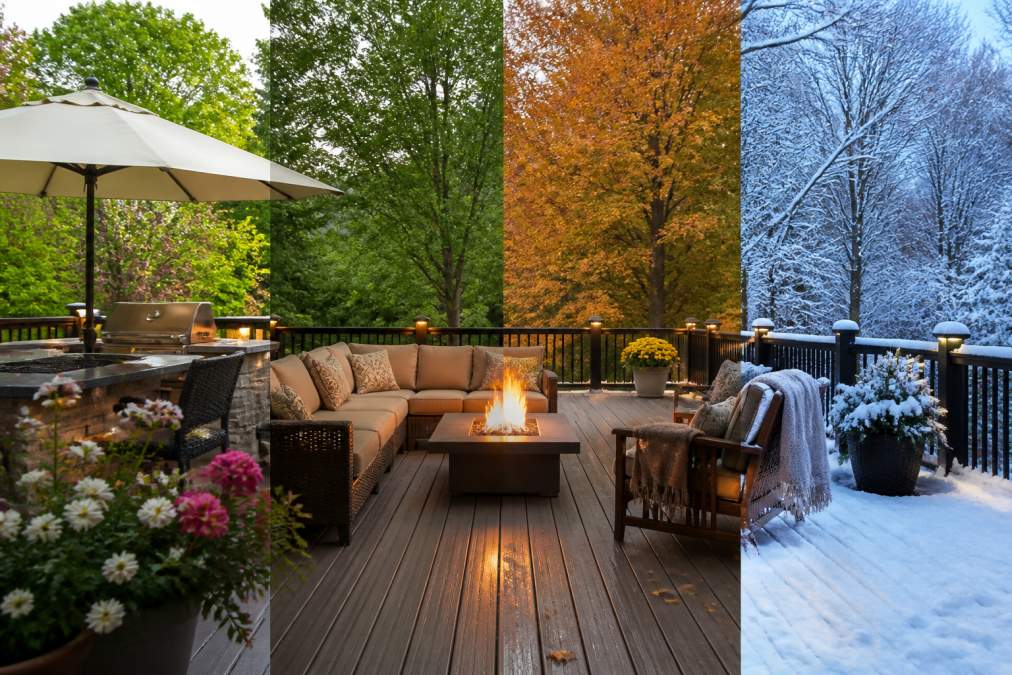
 listicle
Year-Round Deck Design Ideas: 7 Strategies
Table of Contents
- Why Year-Round Deck Design Matters in Cold Climates
- Best Materials for Four-Season Decks
- Multi-Level Deck Designs for Space and Function
- Outdoor Heating Solutions for Decks
- Lighting and Ambiance for Year-Round Use
- Deck Maintenance Checklist for Spring 2026
- Permitting and Zoning Regulations
- Frequently Asked Questions
Last Updated: September 23, 2026
Why Year-Round Deck Design Matters in Cold Climates
A well-designed year-round deck transforms your backyard into a functional outdoor living space you can use every month by engineering it to withstand temperature swings, moisture, freeze-thaw cycles, and the unique demands of colder weather.
Homeowners who plan for year-round use from the start often avoid costly retrofits. A true year-round deck design depends on material selection, structural planning, and thoughtful feature integration that deliver durability, safety, and usability for decades.
Freeze-thaw cycles expand and contract materials, moisture accumulates under snow, ice creates slip hazards, and shortened daylight limits evening enjoyment. A year-round deck design addresses these challenges systematically so your family uses the space in January, not just July.
Best Materials for Four-Season Decks
Composite decking materials like Trex outperform traditional wood in cold climates because they resist freeze-thaw damage. While wood expands and contracts with moisture and temperature changes, causing warping and rot, composite materials engineered from recycled wood fibers and plastic polymers remain stable across seasonal swings.
Trex Composite Decking resists fading, staining, scratching, and mold while requiring no sanding, staining, or painting. Made from 95% recycled materials with authentic wood-grain finishes, it delivers durability without maintenance, critical for a year-round deck design in heavy snow and ice climates.
Composite materials cost more upfront than pressure-treated lumber, but long-term value is clear: a wood deck needs refinishing every 2-3 years, while composite requires only occasional cleaning.
Hardwood options require regular maintenance and are more vulnerable to moisture damage than composite. For a year-round deck design that stays functional through winter, composite is the smarter choice.
Multi-Level Deck Designs for Space and Function
Multi-level platforms maximize usable space on smaller lots and create natural zones for different activities, a lower level for lounging, an upper platform for dining, giving you more functional square footage without expanding your footprint.
Multi-level decks require careful engineering for platform stability and proper connections. Multi-zone deck planning can integrate built-in seating and storage while ensuring code compliance.
For year-round use, multi-level designs offer practical advantages: varying sunlight exposure lets you position seating in sunny winter spots and shaded summer areas. Built-in bench seating with storage provides weatherproof space for cushions and heating equipment. Wider stairs improve safety on icy surfaces.
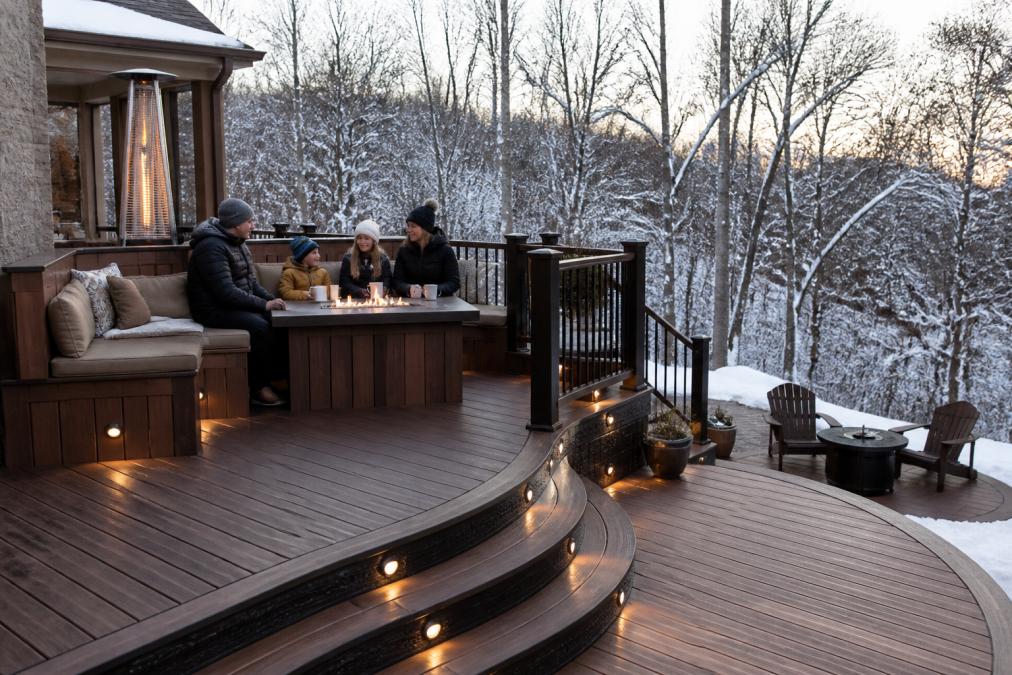
Small-yard homeowners benefit most from this approach. All County Renovations Deck Services focuses on space-saving designs that maximize utility on compact properties, making even a 200-square-foot deck feel spacious.
Outdoor Heating Solutions for Decks
Winter comfort on a deck hinges on heat. Without it, even the most beautiful year-round deck design sits empty when temperatures drop. The challenge is choosing a heating method that balances comfort, cost, durability, and practical installation.
Infrared Heaters: The Most Practical Choice
Infrared heating emits electromagnetic radiation that converts to heat on contact with skin and surfaces, warming you within seconds even in freezing air. Unlike forced-air heaters that waste energy, infrared heaters warm people and objects directly, achieving 70-90% efficiency outdoors.
Propane-powered infrared heaters are the most common choice for decks. A typical 40,000-BTU overhead model can comfortably warm a 10-by-12-foot seating area. Installation costs vary. Propane consumption and refill costs depend on usage and local providers.
Electric infrared heaters eliminate propane refills. Costs for units and professional installation vary. Operating costs are typically higher than propane but require no fuel management.
Portable infrared heaters let you test whether you'll use outdoor heating before committing to a built-in system, though they take up floor space and require seasonal moving.
Fire Pits and Outdoor Fireplaces
Fire pits are less efficient than infrared heaters and require more space and safety planning. A wood-burning fire pit generates 40,000-60,000 BTU but loses much heat to open air. Gas-powered fire tables offer cleaner operation but still consume more fuel per BTU than infrared systems. Both work best as secondary heat sources.
Fire features require 10-foot clearance from flammable materials and present liability concerns with children and pets. For tight spaces or young kids, infrared heating is safer and more practical.
Sizing Your Heating System
Plan for one 40,000-BTU heater per 150-200 square feet in moderate winter conditions. For very cold climates or group entertaining, add a second heater or choose a 60,000-BTU model. Test on a cold evening before permanent installation.
Integration with Deck Design
Mount permanent infrared heaters on a pergola, roof structure, or wall bracket at least 7-8 feet above the deck surface. A freestanding pergola provides summer shade and a winter heating mount, maximizing ROI.
Run electrical and propane lines during initial construction. Retrofitting after the deck is built costs significantly more and may require rerouting.
Cost-Benefit Reality
A complete heating setup can extend your deck's usable season by 2-3 months. For regular entertainers, the payoff is genuine comfort. For occasional users, a portable heater offers a lower-cost entry point.
Lighting and Ambiance for Year-Round Use
Early winter darkness cuts usable evening hours dramatically. Strategic lighting transforms your deck into an inviting space for evening gatherings and creates the ambiance that makes people want to be outside.
Ambient lighting from overhead fixtures or wall-mounted sconces sets the mood.
Deck Maintenance Checklist for Spring 2026
Spring is the critical moment to assess winter damage and prepare your deck for warmer months. Structured maintenance prevents small problems from becoming expensive repairs.
Spring Inspection and Cleaning:
- Clear debris from deck surface, railings, and between boards
- Inspect for winter damage: cracks, loose boards, bent fasteners
- Check railing connections and stair treads for stability
- Pressure wash to remove algae, mold, and salt residue
Structural Assessment:
- Walk the entire deck surface and note soft or bouncy spots
- Check posts and beams for rot or insect damage
- Verify fasteners are tight and not corroded
- Inspect the deck's connection to the house for separation
Seasonal Preparation:
- Stock repair supplies: fasteners, wood stain or composite touch-up materials
- Test heating equipment if you plan to use it again next winter
- Inspect and clean lighting fixtures
Permitting and Zoning Regulations
Deck projects in most municipalities require building permits to ensure compliance with structural codes, electrical standards, setback requirements, and environmental regulations. Skipping permits creates liability, complicates home sales, voids insurance coverage, and risks fines.
Understanding the Local Permitting Process
- What permits are required for a deck of your proposed size and height?
- What are the current frost line depth requirements for post footings?
- Are there setback distances from property lines, wetlands, or easements?
- What railing, stair, and baluster specifications apply?
- Is electrical work (lighting, heating) permitted, or does it require a separate electrical permit?
- What is the typical review timeline and inspection schedule?
- Are there seasonal restrictions on construction (e.g., no work during certain months)?
Critical Code Requirements for Cold Climates
Railing and baluster specifications are standardized across most jurisdictions:
- Railings must be at least 36 inches high on decks over 30 inches above ground
- Balusters must be spaced so a 4-inch sphere cannot pass between them
- Railings must withstand 200 pounds of horizontal force
- Stair treads must be 10-11 inches deep, and risers must be 7-8 inches high
Setback and Zoning Restrictions
The Inspection Process
Inspectors will verify:
- Post footings reach below the frost line and are set in concrete
- Fasteners are appropriate for outdoor use (stainless steel or hot-dipped galvanized)
- Railing height, spacing, and strength meet code
- Stair dimensions and handrails comply with specifications
- Electrical work is done by a licensed electrician
- Deck is properly attached to the house with flashing to prevent water intrusion
Working with a Professional
Frequently Asked Questions
Do I need a permit to build a year-round deck in New Jersey?
Yes. Most municipalities in New Jersey require a building permit for deck construction or renovation. The specific requirements depend on your local jurisdiction, deck size, and whether it's attached to your home. Decks over 30 inches above grade typically need permits and inspections. Check with your local building department or township office before starting any project to ensure compliance with zoning regulations and structural codes.
What are the best materials for four-season decks in cold weather?
Composite decking like Trex outperforms traditional pressure-treated wood in winter conditions. Composite resists moisture absorption, preventing rot and cracking from freeze-thaw cycles. It requires no sanding, staining, or seasonal sealing. Hardwood options exist but demand regular maintenance. For year-round use, composite's durability and low-maintenance profile make it the practical choice, especially in variable climates with temperature swings.
What outdoor heating solutions work best for decks?
Infrared heaters and fire pits are the most effective options. Infrared heaters warm objects and people directly rather than air, making them efficient even in cold weather. Propane or natural gas fire pits provide ambiance and warmth for gathering spaces. Electric patio heaters work for smaller areas. For year-round entertaining, combining multiple heating methods, such as an infrared heater on a covered section plus a fire pit in an open area, maximizes comfort across different zones.
How can I protect my deck from harsh winter weather?
Use composite decking materials that resist moisture and temperature swings. Install proper drainage and slope to prevent water pooling and ice buildup. Apply weatherproof sealant to any wood components annually. Clear snow and ice promptly to reduce structural stress. Add pergolas or shade structures to shield the deck from direct snow accumulation. Built-in gutters and downspouts direct water away from the deck foundation, preventing freeze-thaw damage that weakens structural integrity.