 Comparison
Composite Decking Cost Per Square Foot: 2026 Pricing Guide
Table of Contents
- Composite Decking Cost Per Square Foot: What You'll Actually Pay
- Composite vs Wood Decking Cost Comparison
- Hidden Costs: Fasteners, Railing, and More
- Composite Deck Maintenance Costs Over Time
- Lifecycle Cost Analysis: Composite vs Wood Over 25 Years
- Waste Factor and How to Calculate Your Material Needs
- Conclusion
- Frequently Asked Questions
Last Updated: October 2, 2026
Composite Decking Cost Per Square Foot: What You'll Actually Pay
The cost of composite decking per square foot varies for materials and installation. Your final price depends far more on the details than on the headline rate.
At J Schick & Sons Decks, we walk homeowners through these numbers every week, and the honest answer is that your final price depends far more on the details than on the headline rate. Below, we'll break down material tiers, labor, hidden hardware costs, and the 25-year math that most pricing guides skip entirely.
Material Costs by Tier
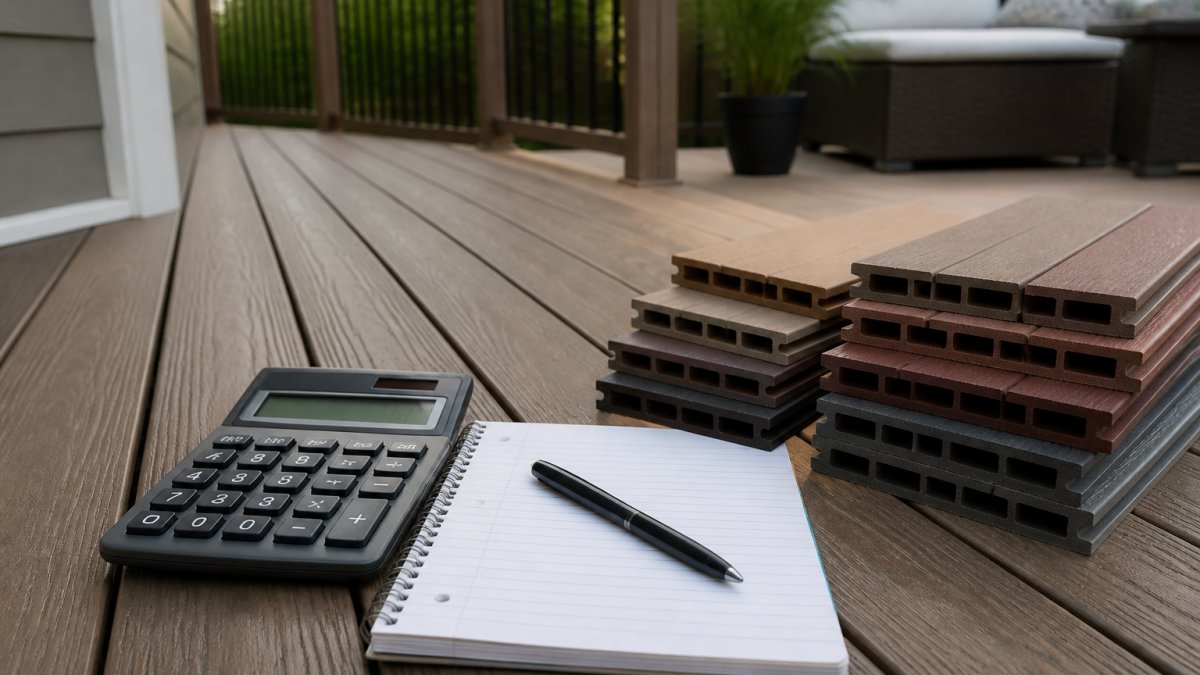
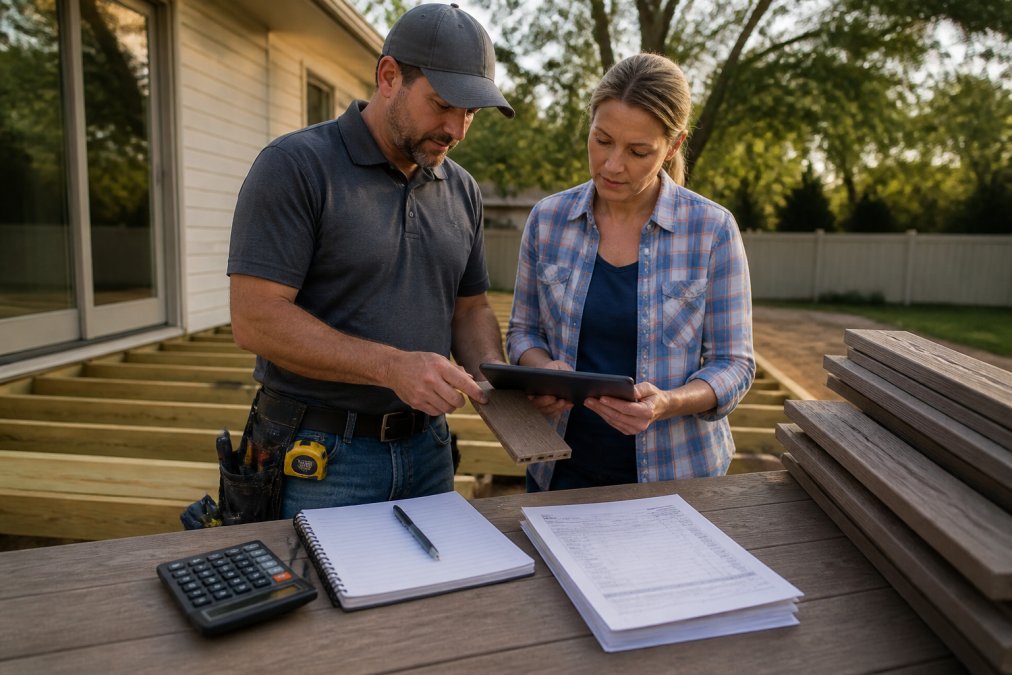
Composite decking splits into three rough tiers, and the gap between them is wider than most people expect. Entry-level boards, mid-range lines, and premium boards vary in cost.
| Tier | Example Line | Starting Material Cost | Best For |
|---|---|---|---|
| Entry | Trex Enhance Basics | $1,500-$1,950 per 300 sq. ft. | First-time builders, wood replacement |
| Mid | TimberTech Prime+ / Terrain | $3.51-$3.79 per linear foot | Balance of price and durability |
| Premium | Trex Transcend Lineage | $7.15 per linear foot | High-sun yards, long-term owners |
A 300-square-foot deck needs roughly 1,900 to 2,200 linear feet of board once you account for waste, which is where the tier gap really shows up.
What Drives the Price Up or Down
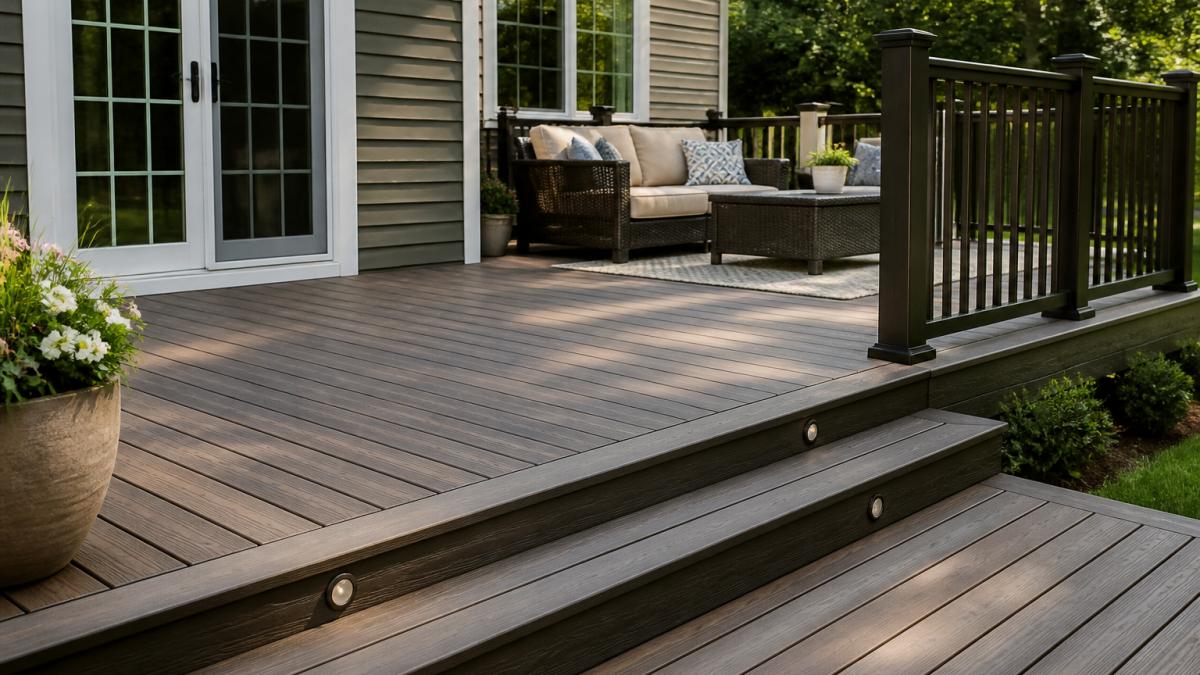
Board length, color selection, and profile type move your number more than the brand name does. Capped composite boards cost more than uncapped, but they carry the fade and stain warranties that make composite worth buying in the first place. PVC decking sits above capped composite on price and performs better in humid conditions.
Deck height matters too. A ground-level deck needs minimal substructure. A second-story deck needs taller posts, cross-bracing, and often a permit review that adds cost before a single board goes down. Site conditions, including sloped yards and tight access, push labor hours up because crews move slower.
Composite vs Wood Decking Cost Comparison
A composite vs wood decking cost comparison usually favors wood on day one and composite over time. Pressure-treated wood materials often cost less per square foot upfront, but wood needs staining every two to three years, and it can warp, splinter, or rot in wet climates. Composite costs more to buy and far less to own.
The upfront premium for composite is real, and it's the reason many homeowners hesitate.
Labor Cost for Composite Deck Installation
Labor cost for composite deck installation varies. Composite boards are heavier than wood, and hidden fastener systems take longer to install than face-screwing. Crews also spend more time on layout because composite expands and contracts with temperature.
Regional Labor Rate Differences
Labor rates swing widely by region, and they're the single biggest reason two identical decks can cost thousands apart. Dense metro areas with high demand and strict permitting carry the highest rates. Rural areas with lower overhead run cheaper, but may have fewer crews experienced with composite systems.
Hidden Costs: Fasteners, Railing, and More
Hidden hardware costs are where budgets quietly blow past the estimate. A material quote covers boards and nothing else, the clips, screws, railing, fascia, and lighting that finish the deck are billed separately, and together they routinely add 15% to 30% to the project total. Here's what each line actually costs and how the choices interact.
Hidden Fastener Systems vs. Color-Matched Screws
This is the single most under-budgeted hardware decision on a composite deck, and the two options trade cost against appearance and labor.
| Fastening Method | Typical Cost | Labor Impact | Best For |
|---|---|---|---|
| Hidden clip system (e.g., grooved boards + clips) | $1.50 - $3.00 per sq. ft. in clips and screws | Slower, clips must be set board by board | Visible walking surface, premium look |
| Color-matched face screws | $0.50 - $1.00 per sq. ft. in screws | Faster, direct drive, no clip alignment | Budget builds, short runs, stair treads |
| Hybrid (clips on field, screws on perimeter and stairs) | $1.00 - $2.00 per sq. ft. | Moderate | Most residential decks |
Railing: The Largest Single Hidden Line
Railing is often the biggest line item after the decking itself, and it's frequently left out of per-square-foot estimates entirely. Composite and aluminum railing systems vary in cost per linear foot installed, depending on material, infill (cable, balusters, glass), and post spacing. This can add significantly to the project total.
The Full Hidden-Cost Checklist
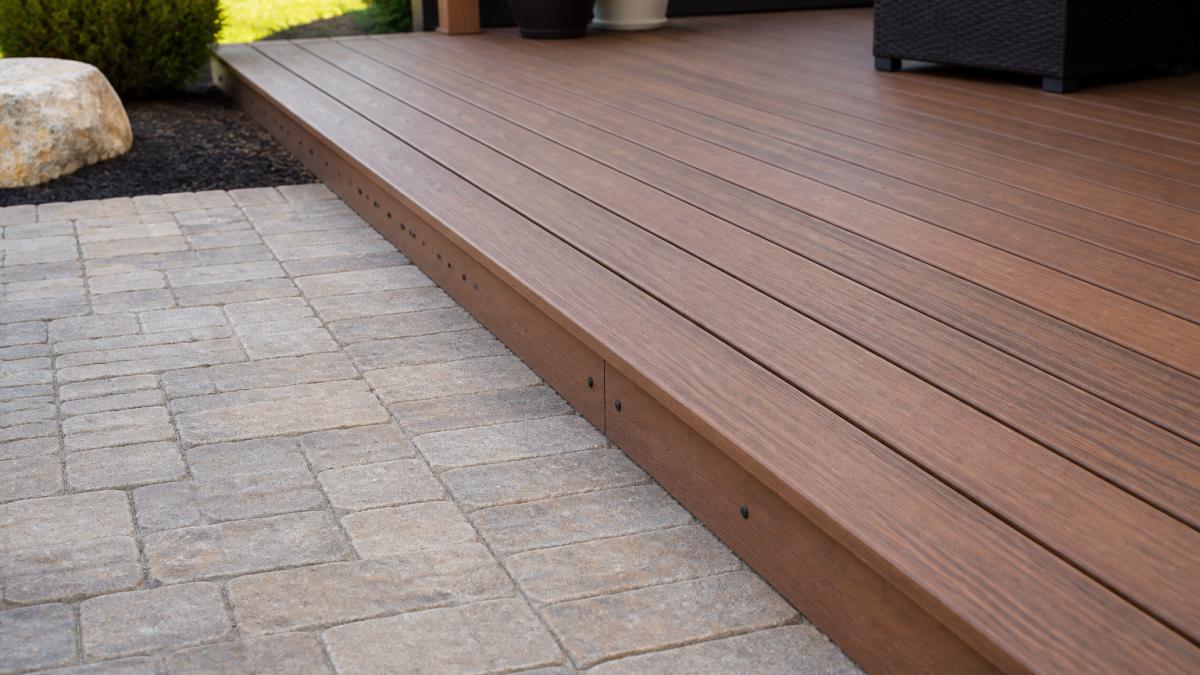
- Fascia boards to finish the deck edge, priced per linear foot and required by many manufacturers to keep the warranty valid
- Stair construction, charged per step, plus the stringers, treads, and risers
- Lighting, including low-voltage runs, transformers, and post-cap lights
- Post caps, trim, and transition pieces at every corner and stair
- Extra joists or blocking for hot tubs, pergolas, and heavy furniture, often a framing upgrade, not a decking one
- Board upgrade for stairs and borders, since picture-frame borders and stair treads usually use a different, often pricier board
How to Keep These Costs Visible
Ask your contractor for a hardware and finish schedule alongside the material quote, a line-by-line list of clips, screws, railing, fascia, and lighting with quantities and unit prices. A quote that shows only "decking materials" and a lump-sum labor figure is hiding the 15% to 30% that decides whether the project lands on budget.
Composite Deck Maintenance Costs Over Time
Composite deck maintenance costs are close to zero compared to wood, which is the entire point of buying it. A composite deck needs periodic cleaning with soap and water, and occasional scrubbing of stubborn stains. There's no sanding, staining, or sealing, and no annual product to buy.
Lifecycle Cost Analysis: Composite vs Wood Over 25 Years
Lifecycle cost analysis is the calculation most pricing guides skip, and it's the one that changes the decision. A lifecycle cost analysis totals every dollar a deck costs from installation through replacement, including materials, labor, maintenance, and repairs. Wood decks often need full board replacement within 10 to 15 years in wet climates. Composite decks from mid-tier lines and up commonly carry 25-year or longer warranties.
Waste Factor and How to Calculate Your Material Needs
Waste factor calculations prevent the two most common budgeting mistakes: ordering too little and paying rush shipping, or ordering too much and eating the cost of unused boards. A standard waste factor for a rectangular deck is 10%. Add 15% for diagonal layouts, herringbone patterns, or decks with many angles and cutouts.
Here's the formula:
- Measure your deck's square footage
- Divide by the coverage per board (check the manufacturer's spec)
- Multiply by 1.10 for straight layouts, 1.15 for angled layouts
- Round up to the nearest full board
Conclusion
Pricing a composite deck means looking past the per-square-foot headline to the tiers, labor, hardware, and long-term costs that decide what you actually spend. J Schick & Sons Decks designs and builds composite and Trex decks for homeowners who want an outdoor space that holds up to weather, pets, and daily use without constant upkeep. We handle design, permits, framing, and finish so your deck is level, secure, and built to last.
Frequently Asked Questions
How much would a 20x20 composite deck cost?
The cost of a 20x20 composite deck (400 square feet) varies depending on material tier and local labor rates. Entry-level composite costs less per square foot, while premium lines push toward the higher end. Your substructure, railing, and site conditions also affect the total. For an accurate estimate on your specific project, contact J Schick & Sons Decks for a quote.
Does the cost of composite decking include the substructure?
No. Most material pricing covers decking boards only. The substructure, including pressure-treated framing, joists, and hardware, is a separate cost. Joist spacing and load-bearing requirements affect how much framing you need. Budget an additional amount for the substructure, depending on site conditions and local labor rates. Always confirm what your contractor includes in their quote.
What is the price difference between capped and uncapped composite decking?
Capped composite decking costs more upfront but lasts longer. The protective shell resists moisture, fading, and staining, which reduces maintenance costs over time. Uncapped boards absorb moisture and are more prone to mold and warping. The price gap varies by brand, but capped products typically run higher than uncapped alternatives. For long-term value, capped composite usually wins.
How does composite decking cost compare to pressure-treated wood?
Composite decking costs more upfront than pressure-treated wood for materials. However, wood requires annual staining, sealing, and occasional board replacement. Over time, composite's lower maintenance costs and longer lifespan can close the gap. If you plan to stay in your home long-term, composite often delivers better return on investment.
What factors influence the total cost of a composite deck installation?
Key factors include material tier, deck size in square footage, substructure requirements, site conditions, railing systems, and local labor rates. Hidden costs like fasteners, fascia boards, lighting, and permit fees add up. Project complexity, such as multi-level designs or awkward yard layouts, also increases labor. Getting multiple contractor quotes helps you see where costs vary and why.
The gap between a rough per-square-foot estimate and a real quote is where most deck budgets go sideways. J Schick & Sons Decks builds custom composite and Trex decks with itemized pricing, expert design, and quality craftsmanship from framing through final trim. Get started with J Schick & Sons Decks and turn your backyard into a space you'll actually use.