 How-to
Deck Boards Warping After Winter: What to Do Now
Table of Contents
- Why Deck Boards Warp After Winter
- Assess the Damage: Cosmetic Cupping vs. Structural Failure
- Your Deck Maintenance Checklist for Spring 2026
- Best Tools for Deck Board Repair
- Step-by-Step: How to Fix Warped Deck Boards
- How to Fix Warped Composite Decking
- When to Replace Deck Boards Instead of Repairing
- Preventing Future Warping and Seasonal Movement
- Frequently Asked Questions
Last Updated: September 28, 2026
Why Deck Boards Warp After Winter
If you are noticing deck board warping after winter, the cause is almost always trapped moisture meeting repeated freeze-thaw cycles. This guide from J Schick & Sons Decks covers assessment through repair.
Moisture, Freeze-Thaw Cycles, and Sun Exposure
Water soaks into wood grain during fall rain and snowmelt. When temperatures drop below freezing, that water expands inside the board; when it thaws, the wood contracts.
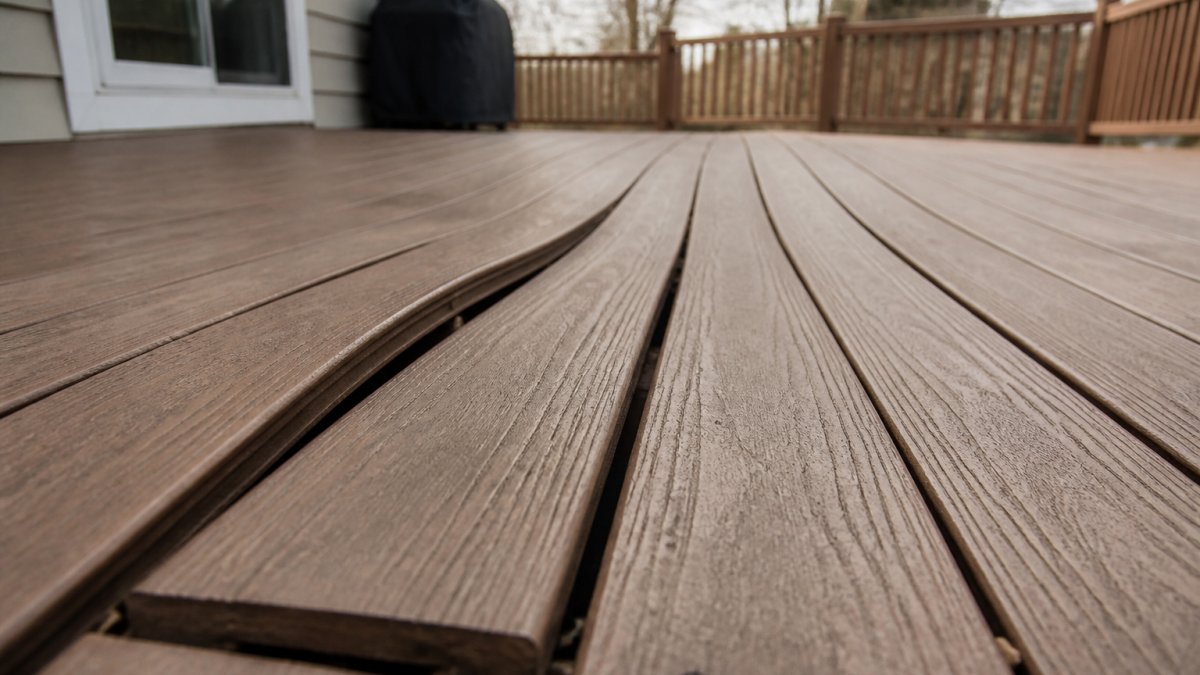
- Cupping means the edges rise and the center dips.
- Crowning means the center rises above the edges.
- Twisting means the board spirals along its length.
Assess the Damage: Cosmetic Cupping vs. Structural Failure
Cosmetic cupping is a surface problem you can often fix. Structural failure means the board, fastener, or framing underneath has given way. The two need very different responses, and most homeowners cannot tell them apart by eye. Start with a level, a screwdriver, and a tape measure, then walk the deck checking how the board moves, how the framing sounds, and how far the surface deviates from flat.
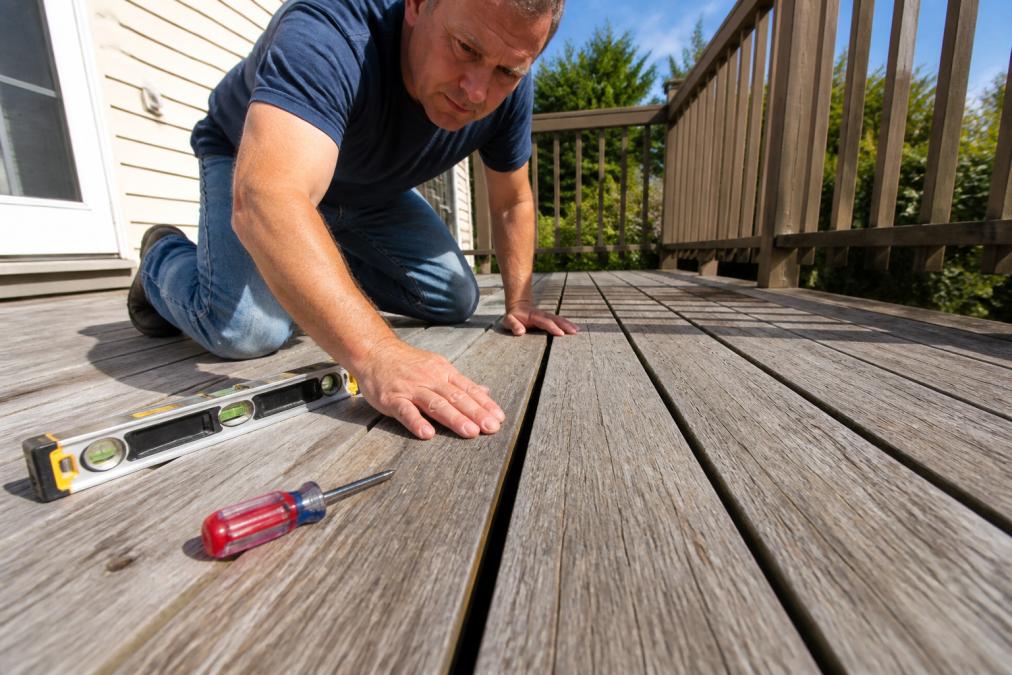
The Three-Test Pass/Fail Framework
Run these three tests on every warped board before deciding on a repair.
- Under 1/4 inch: cosmetic. Sand or plane the high edge and re-secure.
- 1/4 to 1/2 inch: borderline. Repair is possible, but check the joist underneath first.
- Over 1/2 inch: structural. The board has moved beyond what sanding can fix, and the fastener or joist is likely compromised.
Checking Fasteners, Joists, and the Substructure
Push down on each warped board. If it moves, the fastener has likely failed. Look for popped screws, rust, or pulled nails.
- Check for screw shear where fasteners snapped under load.
- Look for fastener corrosion on older galvanized or plain steel screws. The American Wood Protection Association and most deck builders recommend hot-dip galvanized, stainless steel, or ceramic-coated exterior screws for treated lumber, because the copper in modern pressure treatments eats plain steel fasteners.
- Tap joists with a hammer. A hollow sound can mean rot.
When Warping Is a Safety Hazard, Not a Cosmetic Issue
Treat any of the following as a stop-use condition. Do not host a gathering, let kids or pets on the deck, or attempt a surface repair until the framing is fixed.
- Soft, spongy, or crumbling joists or ledger board
- A ledger board that has pulled away from the house by more than 1/8 inch
- More than three boards in a row that flex underfoot
- Visible rust streaks or dark staining around fasteners, which signals long-term moisture
- A railing post that moves when you push it
What a Professional Inspection Adds
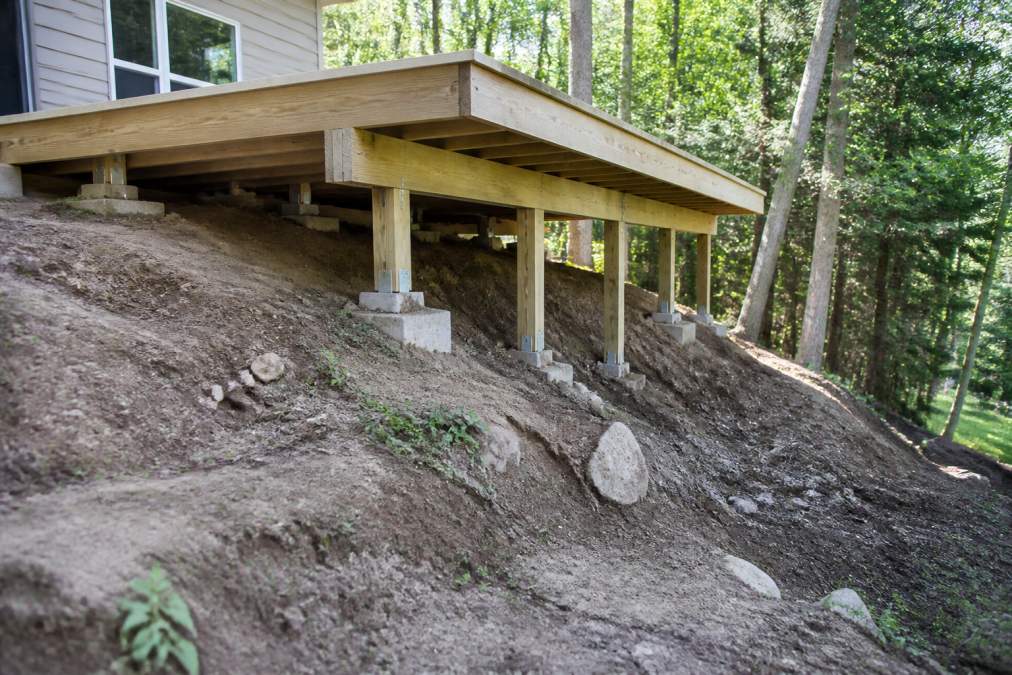
A licensed deck inspector or structural engineer checks what a homeowner cannot easily see: ledger flashing, joist hangers, post-to-beam connections, and footing condition. If your deck is more than 15 years old, has never been inspected, or shows any stop-use signs above, a professional inspection can provide valuable insights.
Your Deck Maintenance Checklist for Spring 2026
A deck maintenance checklist for spring 2026 starts with inspection, then cleaning, then repair, then protection. Work in that order so you fix problems before you seal them in.
- Walk the full deck and mark every warped or loose board
- Probe joists and posts for soft spots
- Clear debris from between boards and under the deck
- Check that air can move freely beneath the structure
- Tighten or replace loose fasteners
- Clean the surface with a deck cleaner
- Let the wood dry fully before sealing
- Apply a fresh coat of sealer or stain
Best Tools for Deck Board Repair
The best tools for deck board repair are a pry bar, a drill, a level, a hammer, and a set of deck jacks. You do not need a full workshop to fix most warped boards.
- Pry bar to lift and remove stubborn boards
- Cordless drill for driving and removing screws
- Level to check flatness before and after repairs
- Deck jacks to slowly straighten a bowed board
- Wood screws rated for exterior use
- Sanding block for light surface cleanup
Step-by-Step: How to Fix Warped Deck Boards
Most warped boards can be straightened or re-secured without replacement. The fix depends on whether the board is loose, cupped, or bowed.
Board Flipping, Screw Replacement, and Deck Jacks
Board flipping is a real fix for one-sided cupping. If the underside is still flat, pull the board, flip it, and re-secure it. The dry face goes up.
How to Fix Warped Composite Decking
Learning how to fix warped composite decking is different from fixing wood. Composite does not absorb water the same way, so the cause is usually heat, expansion, or a missing expansion gap.
- Remove the buckled boards carefully.
- Check the manufacturer's required expansion gap.
- Re-secure with the correct hidden fasteners.
- Never over-tighten, which locks the board in place and causes new buckling.
When to Replace Deck Boards Instead of Repairing
Replace a board when repair will not hold. Repair works for loose fasteners and light cupping. Replacement is the answer for cracked, rotted, or badly bowed boards.
Signs it is time to replace:
- The board is cracked or split along the grain
- Rot is visible or the wood feels soft
- The board stays bowed after straightening
- Fasteners no longer hold, even after replacement
- The board has cupped so badly it is a trip hazard
Preventing Future Warping and Seasonal Movement
Prevention comes down to three things: water control, airflow, and material choice. Get those right and you cut most future warping at the source. The right mix depends on your climate and season, so this section gives you a season-by-season routine plus climate-specific adjustments.
A Season-by-Season Deck Maintenance Routine
Most deck advice is reactive: wait for a problem, then fix it. A proactive routine catches warping before it starts.
Spring (after the last freeze):
- Walk the full deck and mark every warped or loose board with chalk
- Probe joists, posts, and the ledger board for soft spots
- Clear debris from between boards and under the deck
- Check that air can move freely beneath the structure
- Tighten or replace loose fasteners
- Clean the surface with a deck cleaner
- Let the wood dry fully before sealing
- Apply a fresh coat of sealer or stain
Summer (heat and UV):
- Re-check board gaps on hot afternoons; boards that touch at midday need more expansion room
- Sweep off pollen and debris that hold moisture against the surface
- Touch up any sealer that has worn thin on south- and west-facing boards
Fall (before the wet season):
- Clear gutters and downspouts so water is not dumped onto the deck
- Re-seal bare or gray patches before the first freeze
- Check that downspout extensions carry water at least 4 to 6 feet away from the deck
- Remove planters and furniture that trap moisture against the boards
Winter (freeze-thaw):
- Use a plastic shovel, never a metal one, to clear snow
- Avoid rock salt and calcium chloride deicers, which damage wood fibers and corrode fasteners; use sand for traction instead
- Keep snow off the deck where you can, but do not chip ice with a metal tool
Climate-Specific Adjustments
Warping has different causes in different climates, and the fix should match.
Material and Design Choices That Reduce Movement
- Seal or stain wood every few years to slow water absorption.
- Keep an expansion gap between boards so they can move. Most manufacturers specify 1/8 to 1/4 inch for wood and 1/4 inch or more for composite, depending on board length and temperature at install.
- Use pressure-treated lumber or composite decking rated for your climate.
- Inspect fasteners each spring before the season starts.
- Make sure the deck has proper air circulation underneath. Solid skirting traps moisture; lattice or open skirting lets it escape.
UV degradation also ages decking over time. Boards facing full sun all day break down faster. Sealer with UV protection helps, but it is not a permanent fix.
Frequently Asked Questions
My deck boards are warping. How can I fix this?
Start by checking if the warping is cosmetic (cupping) or structural. For mild cupping, tighten or replace fasteners and apply a surface sealer. For severe warping, you may need to flip or replace boards. If the substructure is damaged, consult a professional. Always address moisture sources like poor air circulation first to prevent recurrence.
Will warped wood go back to normal?
Warped wood rarely returns to its original shape on its own. Once wood cells are crushed or stretched by moisture and heat, the damage is permanent. You can sometimes reduce minor warping by drying the board and applying pressure, but replacement or flipping is often the only reliable fix. Composite boards may respond slightly better to heat, but severe cases still require replacement.
Is warped decking a structural safety issue?
Warped boards alone are usually not structural, but they can indicate deeper problems. Cupping and crowning can create tripping hazards, and loose fasteners may lead to board failure. If you notice sagging joists, soft spots, or widespread movement, have a professional assess the deck's structural integrity. Safety is especially important with children and pets.
When should you replace deck boards instead of repairing them?
Replace boards when they are cracked, split, or severely warped beyond flattening. If more than 20% of boards show damage, or if the deck is over 15 years old, replacement may be more cost-effective. Also replace if fasteners no longer hold or if the board material is crumbling. For isolated issues, repair is fine.