 Listicle
What Are the Best Backyard Deck Renovation Ideas for Families?
Last Updated: October 24, 2026
Quick Summary
Backyard deck renovation ideas for families include multi-level tiered decks that create distinct zones for different ages, built-in seating and storage that maximize small spaces, and safety features like properly spaced railings and self-closing gates. Low-maintenance composite materials and shade structures extend usability year-round while reducing upkeep.
- Tiered decks create separate zones where kids play safely on one level while adults relax on another
- Railings must be 36 inches high with balusters spaced no more than 4 inches apart to prevent head entrapment
- Built-in bench seating with lift-top storage holds toys and gear while saving space in small backyards
- Composite decking requires no staining or sealing, only occasional sweeping and hosing for busy families
- Shade structures like pergolas or retractable awnings extend the usable season by months
Table of Contents
- Multi-Level and Tiered Decks for Growing Families
- Family-Friendly Deck Ideas That Work for All Ages
- Small Backyard Deck Ideas That Maximize Your Space
- Deck Safety Features for Children and Pets
- Low-Maintenance Deck Materials for Year-Round Use
- Creating Zones for Play, Dining, and Relaxation
- Start Your Family Deck Renovation Today
- Frequently Asked Questions
Multi-Level and Tiered Decks for Growing Families
A multi-level deck transforms how your family uses outdoor space, making it one of the most popular backyard deck renovation ideas. Instead of a flat platform, tiered decks create distinct zones across different elevations in your yard.
Growing families benefit most: kids gain safe play areas on one level while adults relax on another, and the separation naturally manages supervision. Pets appreciate the defined boundaries too.
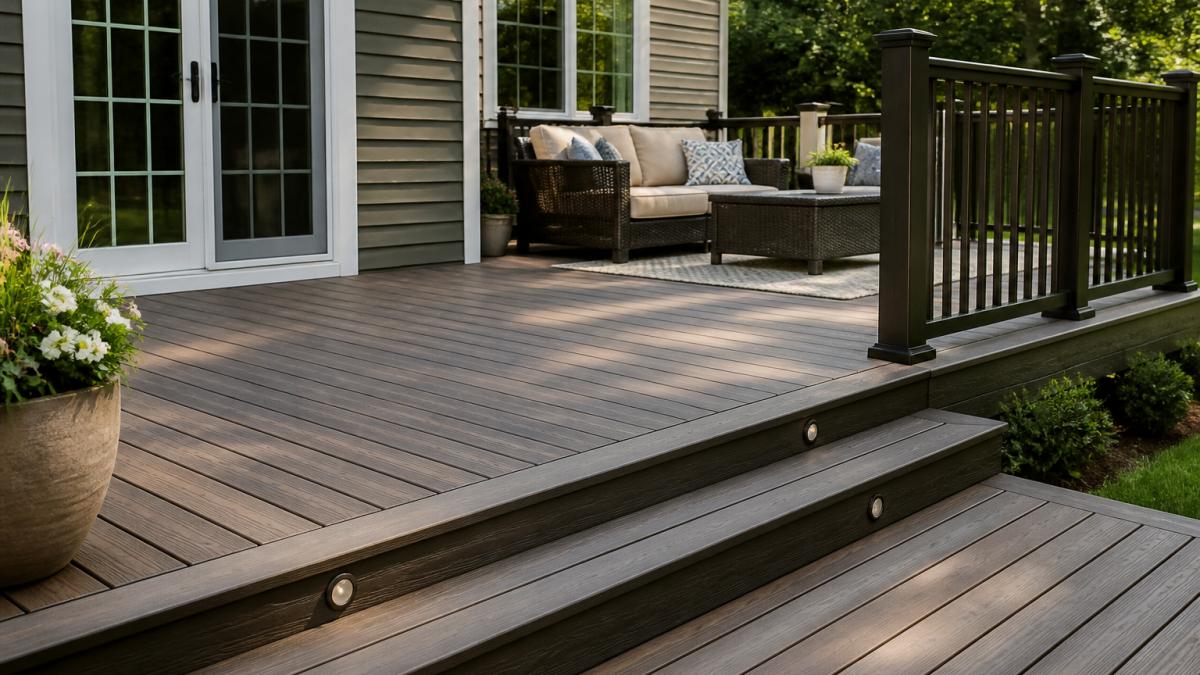
Tiered decks work especially well on sloped backyards. Rather than fighting the terrain, you build with it: an upper level near the house serves as the main entertaining area, and a lower level extends into the yard as a transition zone. Stairs between levels become architectural features, not just functional elements.
The structural complexity costs more upfront, but the payoff is real: your deck accommodates more people comfortably, sightlines improve because guests aren't crowded on one plane, and tiered decks photograph better, which matters for resale value.
J Schick & Sons Decks specializes in providing top-notch outdoor deck services designed to elevate your living space. The most successful ones use elevation changes to create natural gathering spots rather than treating levels as an afterthought.
Family-Friendly Deck Ideas That Work for All Ages
The best family deck accommodates toddlers, teenagers, and grandparents simultaneously, which means thinking beyond aesthetics to usability for different ages and abilities.
Wide, open railings are safer than solid panels for families with young children because kids can see through them, which reduces the temptation to climb.
Built-in seating changes how families interact with the space. Perimeter benches give kids a place to sit without extra furniture and create natural stopping points for toddlers learning to walk.
Slip-resistant surfaces matter more than most homeowners realize. Composite decking typically has better grip than smooth wood, especially when wet, which is critical for kids who run, slide, and play rough.
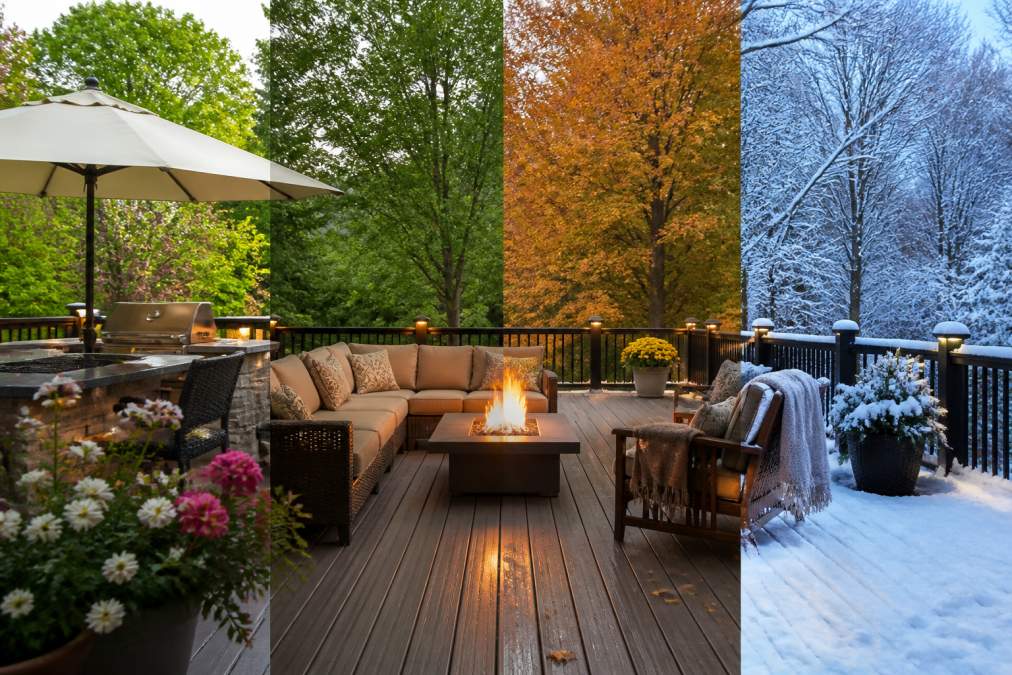
Shade is non-negotiable for year-round family use. A pergola or retractable awning extends the usable season by months, making summer afternoons bearable while winter sun still reaches the deck. You're not adding luxury, you're adding functionality families use constantly.
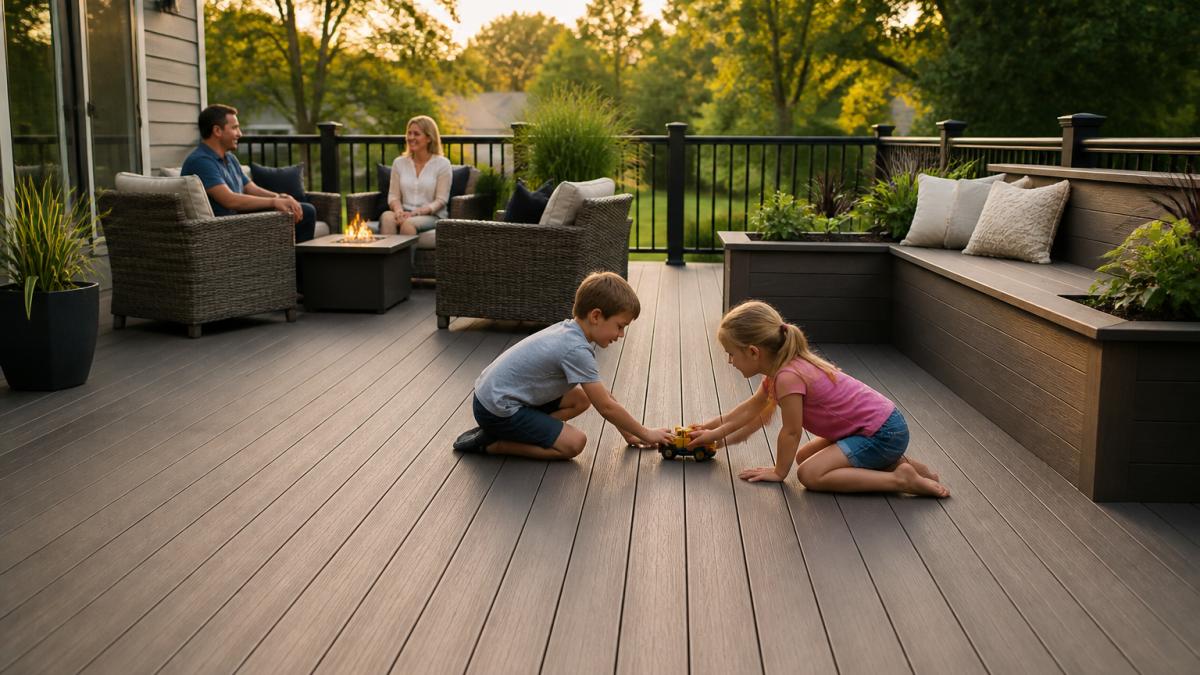
Lighting transforms the deck from daytime-only to evening hangout. String lights create ambiance, but recessed deck lights let kids navigate safely and extend outdoor time after sunset. Smart lighting lets you adjust brightness without leaving your seat.
Small Backyard Deck Ideas That Maximize Your Space
Small yards demand strategy. A cramped deck feels worse than no deck at all, so the solution isn't to build smaller, it's to build smarter.
Plan circulation first. Before choosing furniture, mark the walking paths from the house door to the grill, to the stairs, and to the yard.
Build storage into the structure. Bench seating with lift-top storage holds pool toys, gardening tools, and seasonal gear, and stair risers can be built as drawers.
Use vertical space. Tall planters, wall-mounted shelving, and climbing vines draw the eye upward. A vertical garden or slatted screen with hooks for hose reels and tools adds function without eating floor space.
Choose shapes that soften tight footprints. L-shaped or curved decks work better than rectangles in tight spaces because they create distinct corners for seating and storage without a long narrow run.
Select furniture that disappears. Nesting tables and stackable chairs store compactly, and a single multi-purpose ottoman becomes seating, a table, and storage. Every piece should earn its square footage.
Zone with rugs and planters instead of walls. Outdoor rugs define a play or dining area without blocking sightlines, and low planters can separate zones while keeping the deck feeling open.
Light proportionally. Oversized fixtures overwhelm a small deck. Small recessed lights, step lights, or subtle string lights maintain openness while providing safe illumination for evening use.
Custom deck design for small backyards explores these strategies in detail.
Deck Safety Features for Children and Pets
Safety isn't a feature you add after the fact, it's part of the design from day one.
Railings and balusters. The guardrail height most residential codes require is 36 inches minimum, and balusters should be spaced so a 4-inch sphere can't pass between them.
Stair gates and self-closing hardware. If the deck is elevated, plan for a gate at the top of every stair run.
Supervision sightlines. The most underrated safety feature is the ability to see the whole deck from the kitchen or family room.
Splinter-resistant surfaces. Pressure-treated wood can splinter, especially in high-traffic areas and along board edges. Composite and capped composite boards eliminate splinters and stay cooler underfoot in summer sun.
Stairs. Handrails on both sides make sense for families with young children, even where code requires only one.
Heat and shade. A deck in full sun can become too hot for bare feet and unsafe for pets. A pergola, shade sail, or retractable awning reduces surface temperature and extends usable hours.
Pet-specific details. Look for railing infill that a small dog can't squeeze through, avoid gaps under built-in benches where a pet can become stuck, and choose decking that is gentle on paws.
Adapt as kids grow. Safety features should be revisitable, not permanent.
Key safety specifications ensure your deck protects children and pets at every stage of growth.
| Safety Feature | Requirement | Purpose |
|---|---|---|
| Guardrail height | 36 inches minimum | Prevents falls |
| Baluster spacing | No more than 4 inches apart | Prevents head entrapment |
| Stair tread depth | At least 10 inches | Reduces stumbling |
| Stair riser height | No taller than 7.75 inches | Reduces stumbling |
| Gate hardware | Self-closing, self-latching | Removes human error |
| Stair handrails | Both sides for families | Supports young children |
Low-Maintenance Deck Materials for Year-Round Use
Material choice determines how much time you spend maintaining versus enjoying your deck.
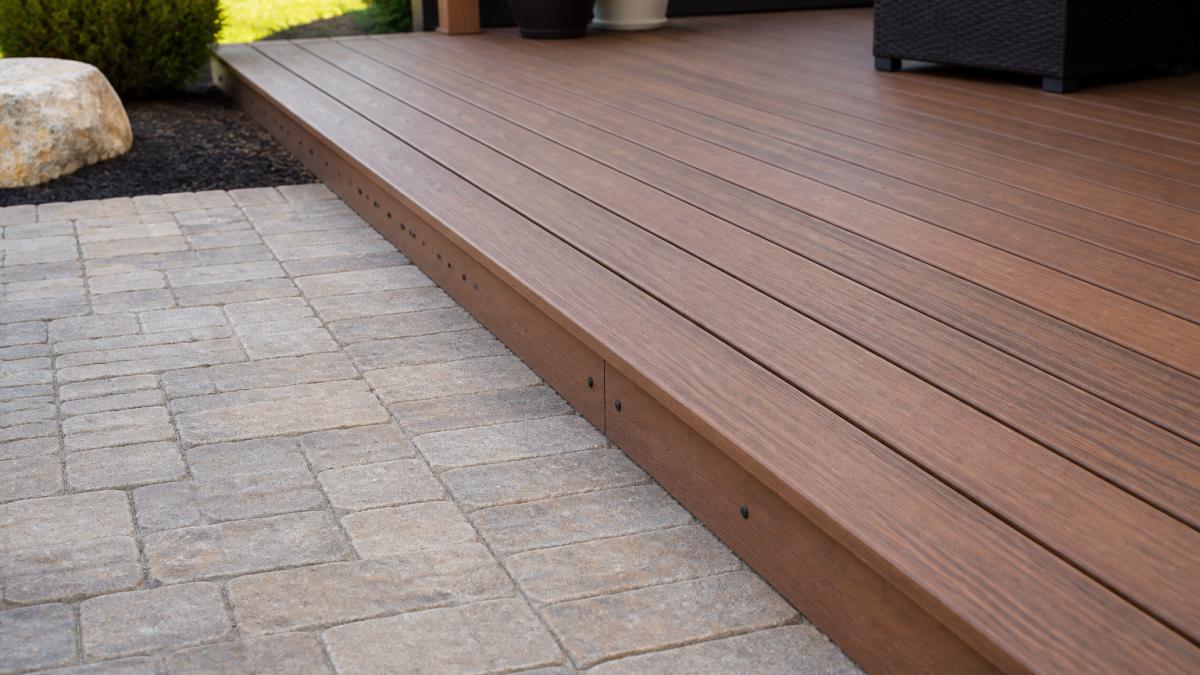
Composite decking requires dramatically less maintenance than wood: no staining, no sealing, no sanding. You sweep it, hose it down occasionally, and that's it. For busy families, this isn't a luxury, it's a practical necessity. Trex deck resurfacing and composite versus wood deck cost comparisons help you evaluate the long-term investment.
Wood decks demand constant attention: spring power washing and inspection, summer resealing, fall leaf clearing, and winter concerns about ice and snow damage. That's the reality of wood deck ownership.
Composite materials come in colors that don't fade noticeably, while wood fades within months of installation. Composite holds its appearance for years, staying consistent even in high-traffic areas where wood would show wear patterns.
Temperature differences matter more than most people realize. Composite can stay cooler than dark wood in summer sun, which can affect how much your family uses the space.
Moisture resistance prevents rot and mold. Wood absorbs water and develops problems over time. Composite resists moisture, which extends its lifespan significantly.
Weather protection extends usability. A covered deck works in rain. An open deck becomes unusable during storms. Pergolas, retractable awnings, and solid roofs transform your deck from a fair-weather space into a year-round outdoor room.
Creating Zones for Play, Dining, and Relaxation
Families need different spaces for different activities. A single flat deck forces compromises. Zoning creates natural separation without physical barriers.
The dining zone should be near the kitchen door. This reduces the distance you carry food and dishes. A table with seating for six fits comfortably on a 12-by-14-foot area. Built-in benches save space compared to freestanding chairs.
A play zone works best slightly separated from adult spaces. Kids need room to move without disrupting conversations. A lower level or a section screened by planters creates this separation naturally.
Relaxation areas benefit from quiet placement away from high-traffic paths. A corner with lounge chairs and a side table becomes the spot where adults escape. Shade here is essential, you won't use a sunny corner for relaxation during summer.
Conversation areas work best with seating arranged in a circle or U-shape. This encourages interaction instead of everyone staring in the same direction. Built-in seating along the perimeter creates natural gathering spots.
Transitions between zones should feel intentional. A step up, a change in surface material, or a subtle shift in elevation signals that you've entered a different space. This prevents the deck from feeling chaotic.
Flexibility matters because families change. A deck designed with movable furniture adapts as your kids grow: built-in elements provide structure while open areas allow customization.
Start Your Family Deck Renovation Today
A family deck isn't just an outdoor structure, it's where memories happen. Your kids will remember running across it and gathering with relatives far longer than they'll remember what color the railings were.
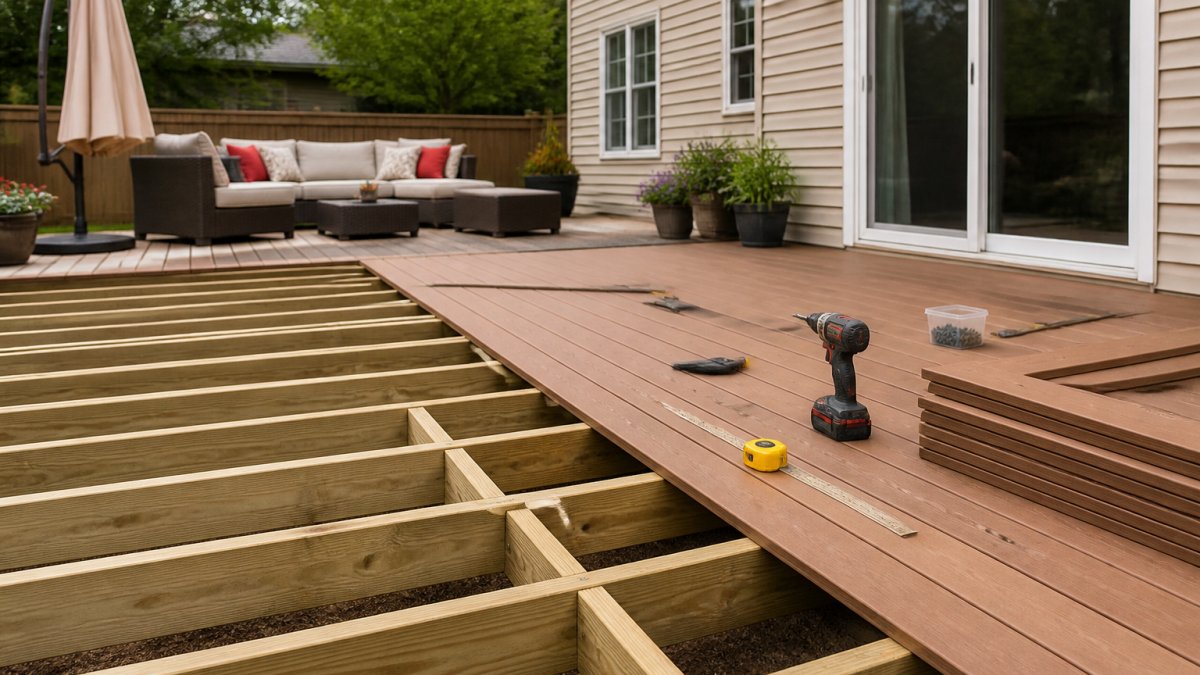
The planning process for backyard deck renovation ideas feels overwhelming until you break it into steps. Start by identifying what your family actually needs: more dining space, better play areas, or year-round usability? Your answers determine the design direction.
J Schick & Sons Decks specializes in transforming backyards into functional family spaces. We are dedicated to transforming your backyard into a beautiful and functional area that enhances your home. Our approach combines professional design with practical problem-solving.
Get a free estimate to see what's possible in your specific backyard. We'll assess your space, understand your family's needs, and show you options that fit your situation. The conversation itself is valuable, it clarifies what matters most and what's actually achievable.
Frequently Asked Questions
What makes a backyard deck renovation family-friendly?
A family-friendly backyard deck renovation includes safety railings that meet code, slip-resistant surfaces, adequate lighting for evening use, and defined zones for different activities. Built-in seating and storage help contain toys and gear. Low-maintenance materials reduce the time spent on upkeep, leaving more time for your family to enjoy the space. Multi-level designs and tiered layouts create visual interest while accommodating different age groups and activities in one outdoor area.
What are the safest deck safety features for children?
Essential deck safety features for children include guardrails at least 36 inches high with balusters spaced no more than 4 inches apart to prevent entrapment. Anti-slip deck boards reduce fall injuries, while proper lighting illuminates stairs and transitions. Consider adding a gate at deck access points to control entry for young children. Secure railings, covered fasteners, and rounded edges minimize pinch points and cuts. Regular inspections catch loose boards or nails before they become hazards. These features protect kids while allowing them to play freely.
How can I make a small backyard deck work for a family?
Small backyard deck ideas focus on smart zoning and multi-functional furniture. Use built-in benches with storage underneath to save space while providing seating and organization. Define separate areas for play, dining, and relaxation with subtle level changes or strategic furniture placement. Choose lightweight, stackable outdoor furniture that you can rearrange as needs change. Vertical elements like trellises or wall-mounted planters add greenery without consuming floor space. A small deck can comfortably serve a family when designed with intentional layouts and dual-purpose features.
Which deck materials require the least maintenance?
Low-maintenance deck materials like composite decking and pressure-treated wood require far less upkeep than traditional wood. Composite boards resist fading, staining, and rot without annual staining or sealing. Both options withstand weather and foot traffic while remaining safe for families. Unlike traditional wood, these materials don't splinter as easily, making them safer for children and pets. The reduced maintenance time and extended lifespan can make them cost-effective for busy families.
The best backyard deck renovation starts with clarity about what your family needs, not with what looks good in photos. When you design with your actual life in mind, the deck becomes a space you use constantly instead of a nice-looking platform you occasionally visit.